Hardware
Industrial-Grade Sensors for Aquaculture
Six parameters. One platform. Designed for 24/7 submersion in the toughest aquaculture environments.
Every sensor in the OceanStar line uses RS-485 Modbus/RTU industrial protocol, carries an IP68 waterproof rating, and is built with 316L stainless steel and POM engineering plastics. No consumer-grade compromises — these are instruments built for commercial RAS operations.
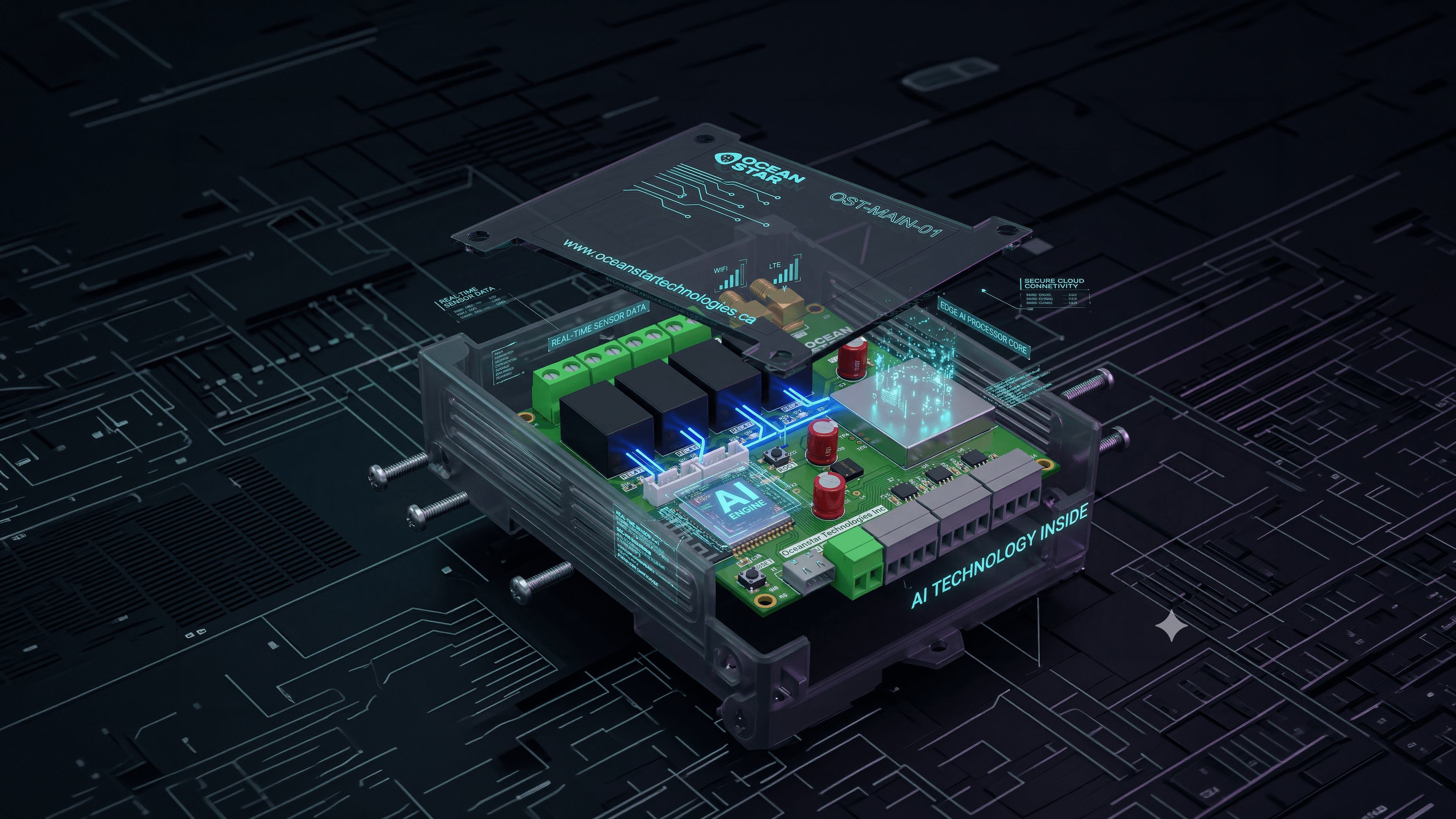
OST-MAIN-01
The brain of the OceanStar system. A custom-designed circuit board that collects data from up to 3 water quality sensors and transmits it to the cloud via WiFi or LTE cellular — so your monitoring stays online even without reliable internet.
Four built-in relay outputs let you automate equipment: aerators, heaters, dosing pumps, or alarms — all triggered by real-time water conditions. Designed, manufactured, and 72-hour tested in Canada. IP65-rated enclosure mounts on any wall or DIN rail.
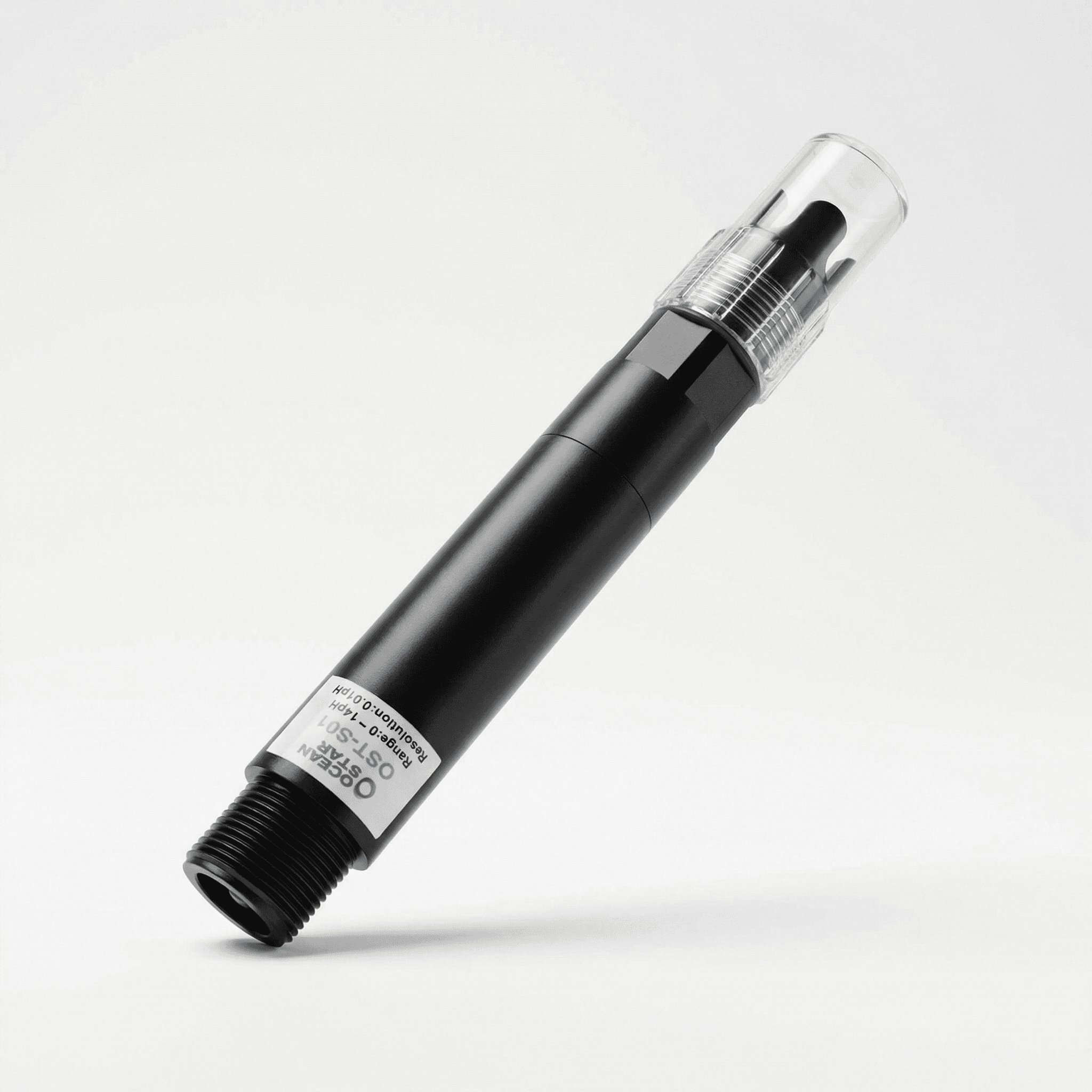
pH Sensor
Precision pH monitoring with patented long-life electrode
The OST-S01 uses a dual high-impedance differential amplifier for strong anti-interference in noisy aquaculture environments. Its patented microporous salt bridge maintains a forward bleed pressure of at least 100 kPa, extending electrode life to over 20 months — double the lifespan of conventional industrial electrodes.
pH directly controls ammonia toxicity in RAS. At pH 7.0, only 0.3% of ammonia is toxic NH₃ — at pH 9.0, it jumps to 30%. Continuous pH monitoring with 0.01 resolution catches the slow alkalinity decline that leads to biofilter crashes before they happen.
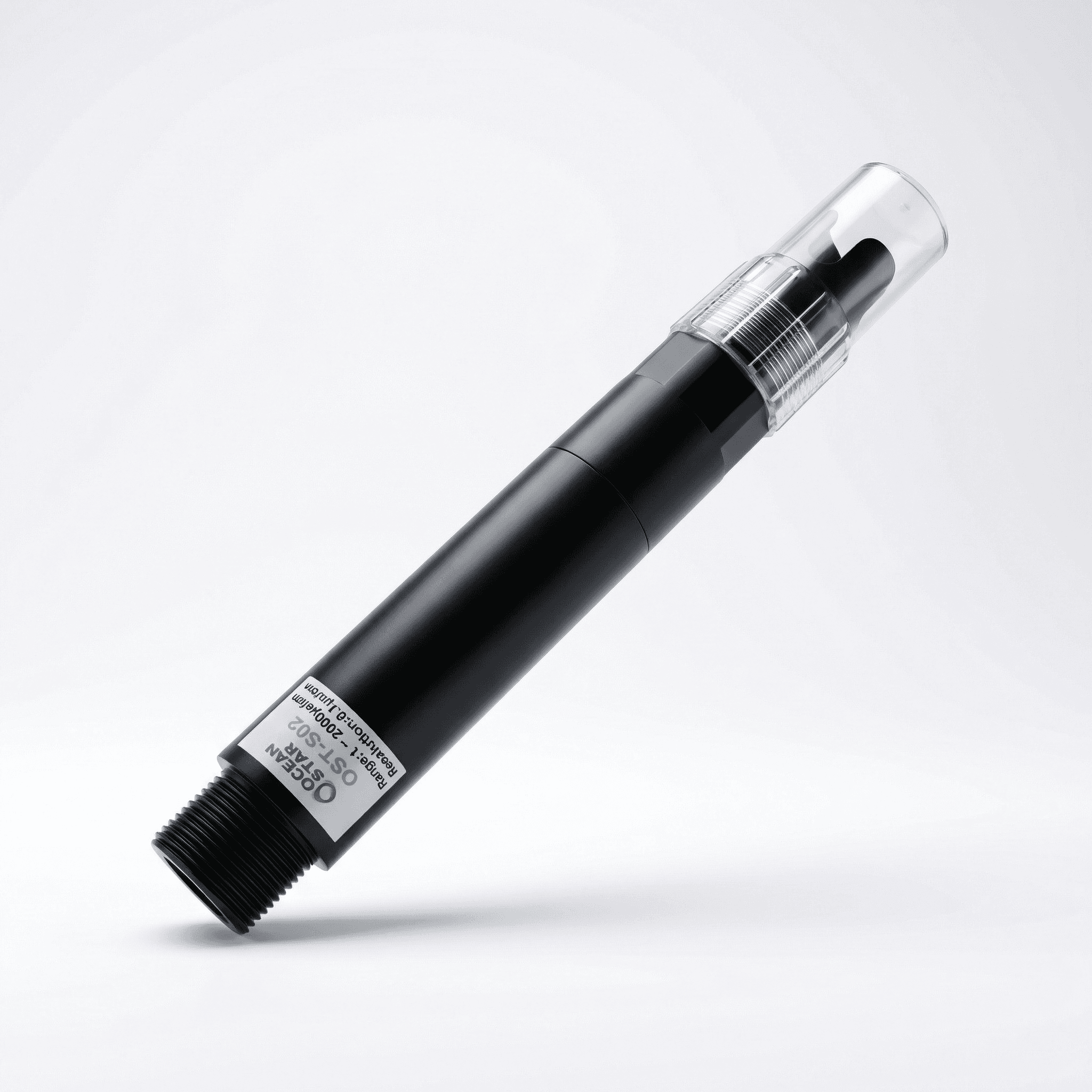
Conductivity Sensor
Freshwater conductivity and mineral content monitoring
The OST-S02 measures electrical conductivity in freshwater RAS systems, providing real-time insight into dissolved mineral content, salt additions for nitrite management, and overall water quality stability. Automatic Pt1000 temperature compensation ensures accurate readings across operating conditions.
Conductivity tracks dissolved mineral content and salt levels. In freshwater RAS, operators add NaCl at 1–3 ppt to mitigate nitrite toxicity — the S02 confirms correct dosing. Sudden conductivity changes can signal water quality shifts or contamination from makeup water.
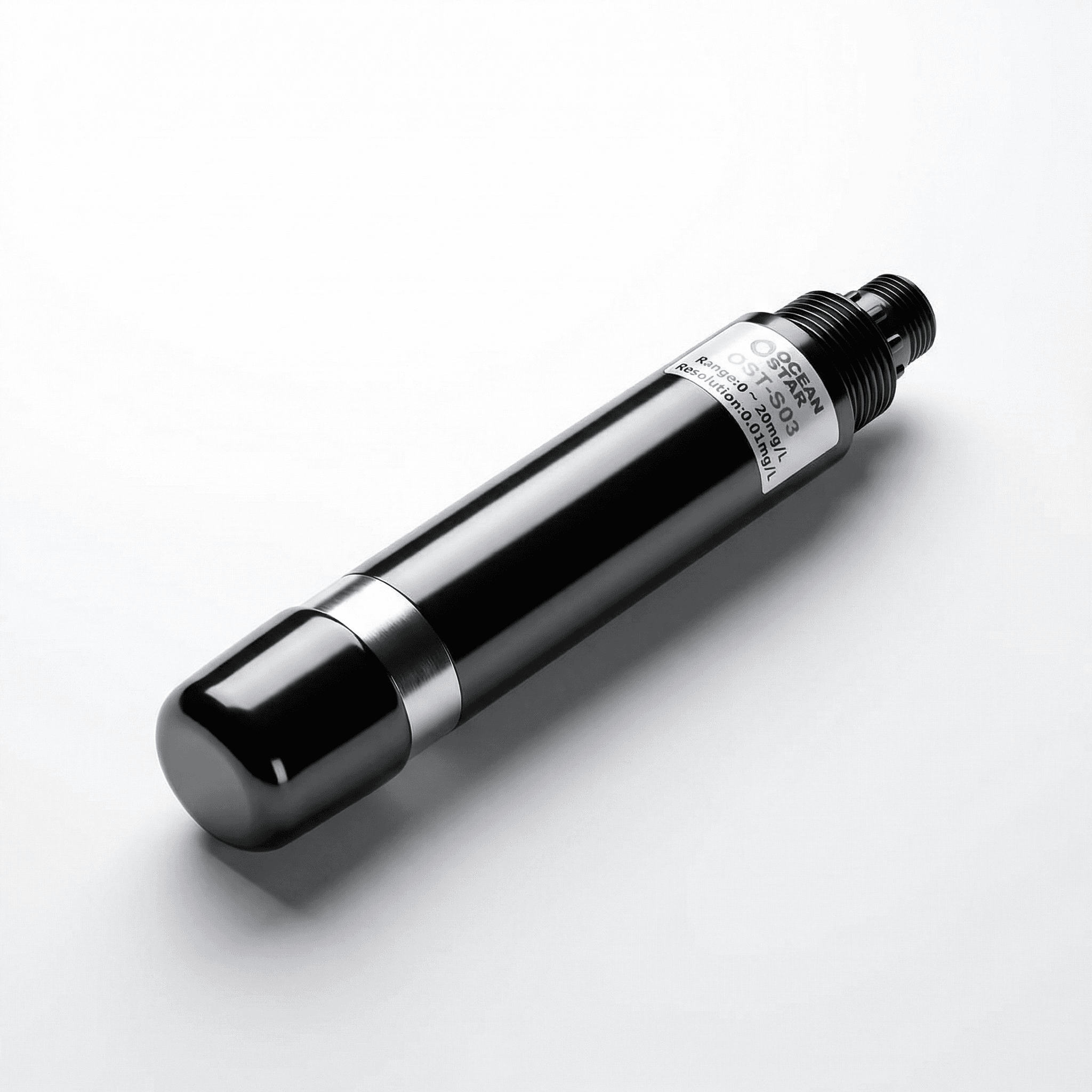
Dissolved Oxygen Sensor
Fluorescence-based DO — the most critical parameter in RAS
The OST-S03 uses fluorescence quenching technology rather than traditional electrochemical methods. The sensor measures the phase difference between emitted fluorescence and excitation light, calculating oxygen concentration with built-in temperature and salinity compensation. No electrolyte, no membrane replacement, no flow-rate dependency.
Dissolved oxygen is the single most critical parameter in RAS. Fish in a high-density system (60–120 kg/m³) can consume all available oxygen in 15–30 minutes if oxygenation fails. Atlantic salmon require >7 mg/L minimum, with >8 mg/L preferred. The S03's fluorescence method provides continuous, drift-free measurement without consuming oxygen itself.
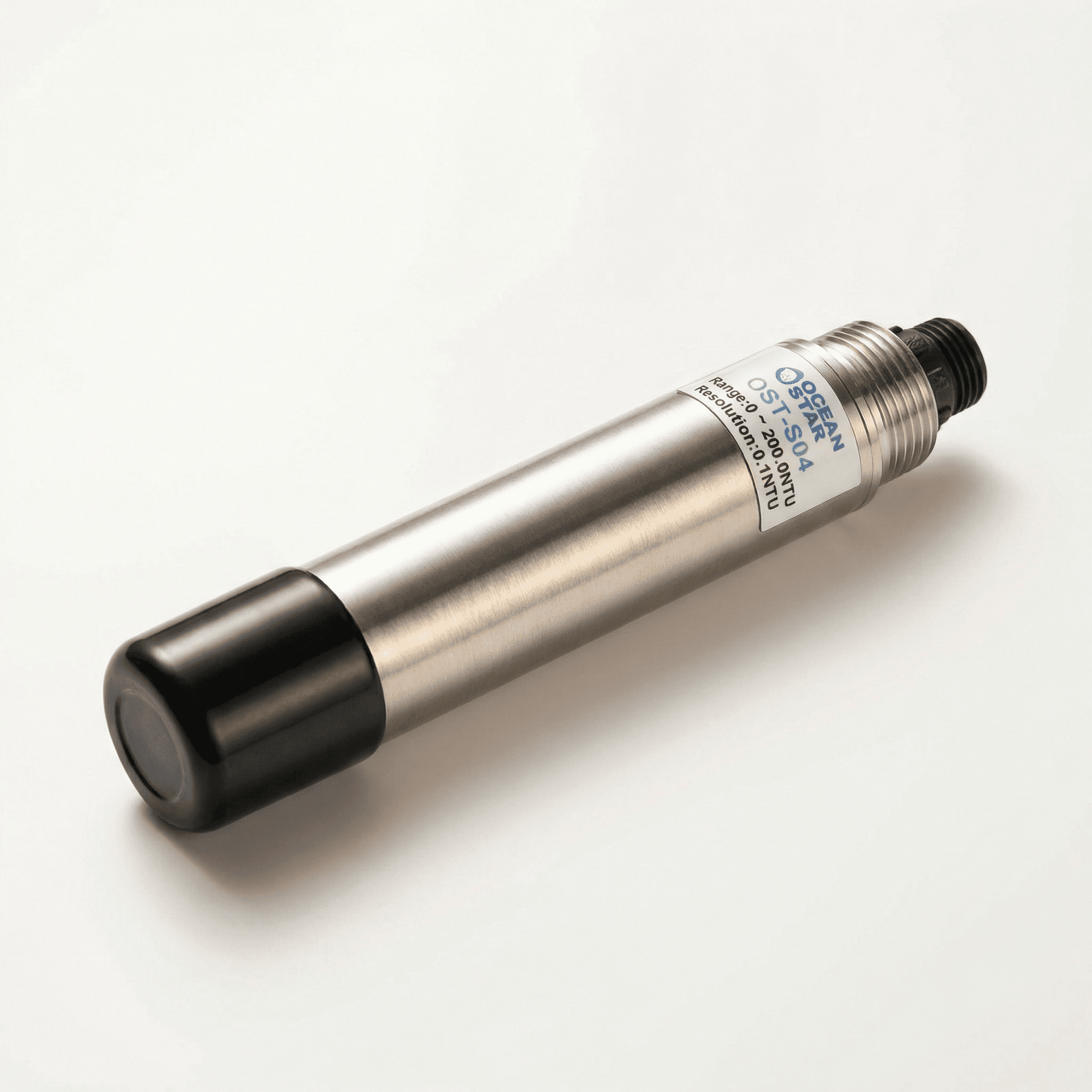
Turbidity Sensor
Optical turbidity measurement for water clarity monitoring
The OST-S04 uses 90-degree scattered light measurement with an infrared LED source for high stability. Its optical fiber structure provides strong resistance to external light interference, ensuring accurate readings regardless of ambient conditions in your facility.
Turbidity above 25 NTU irritates fish gills, reducing oxygen uptake and increasing disease risk. High turbidity also reduces UV sterilizer effectiveness, a critical biosecurity concern. The S04 detects mechanical filtration problems, overfeeding events, and biofilm sloughing — all indicators of system stress.
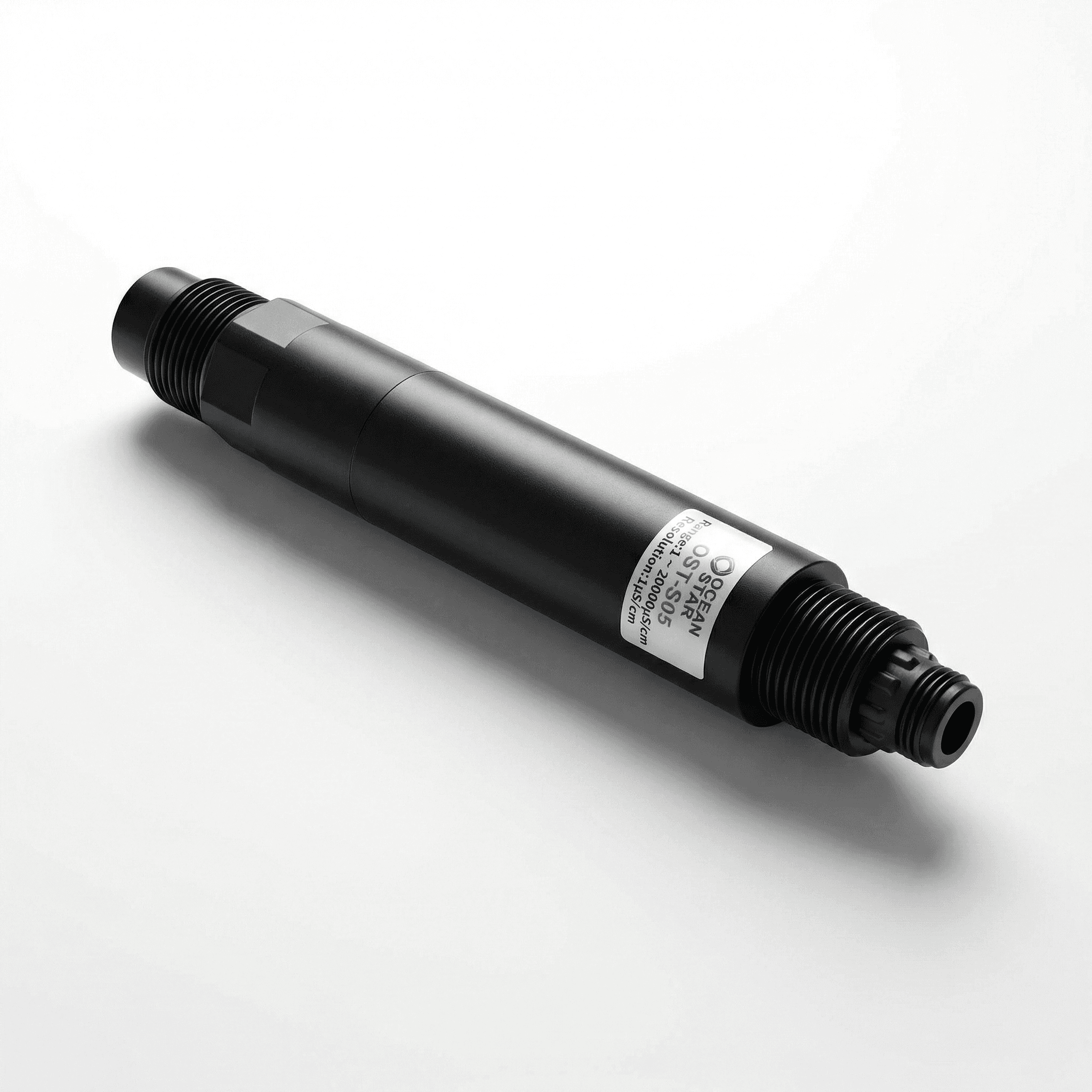
Conductivity Sensor (Marine)
Extended range conductivity for saltwater and marine RAS
The OST-S05 provides the same industrial-grade measurement as the S02 but with a 100× wider range — designed specifically for marine RAS, brackish water systems, and high-salinity shrimp farms where conductivity far exceeds freshwater levels.
Marine RAS species like barramundi, yellowtail, and Pacific white shrimp require precise salinity management. Osmoregulation consumes 5–10% of a fish's metabolic energy — wrong salinity means chronic stress. The S05 monitors full seawater salinity ranges and catches the sudden changes that cause osmotic shock.
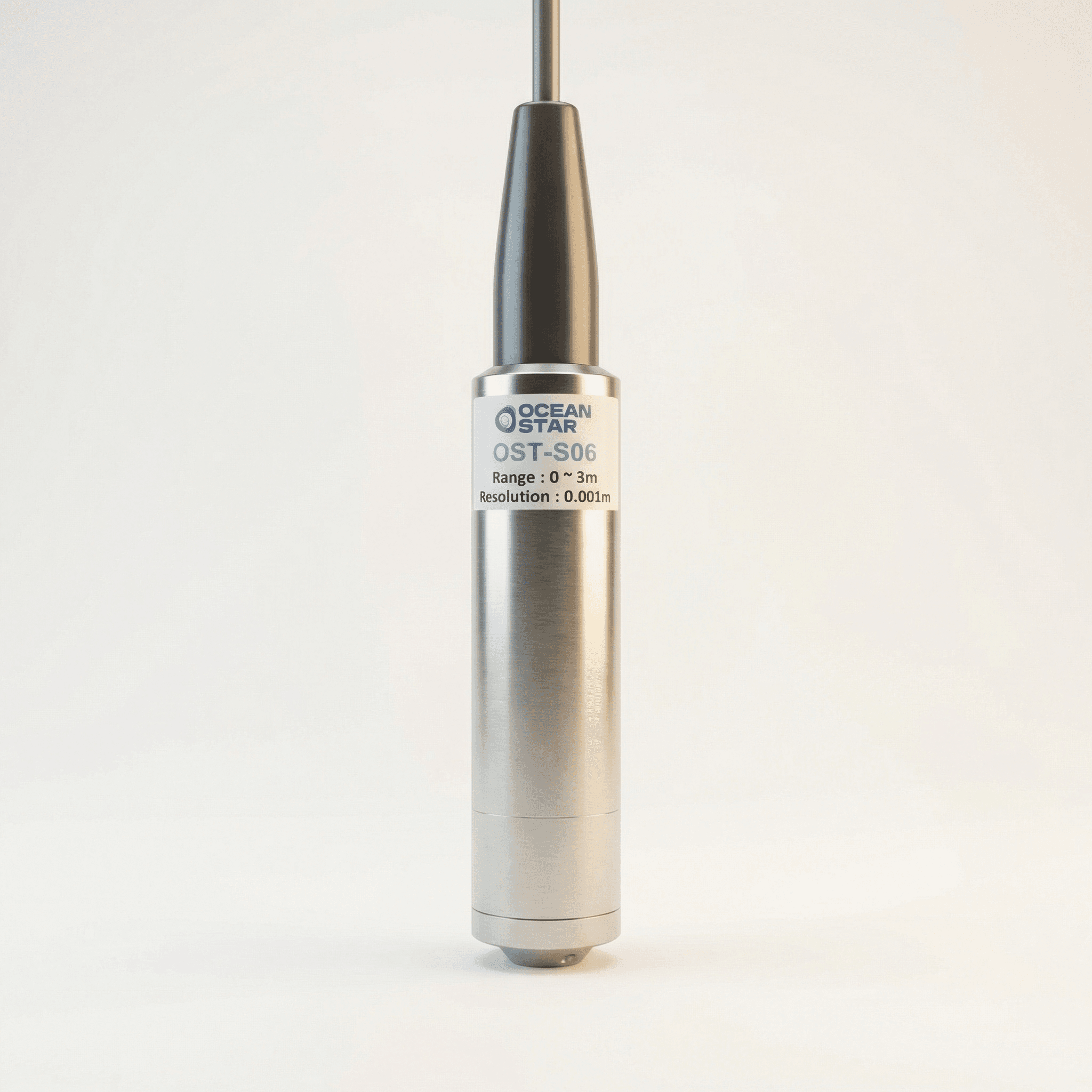
Water Level Sensor
High-precision submersible level monitoring with 2,400 Hz sampling
The OST-S06 uses a diffused silicon piezoresistive pressure core with an ADI-grade operational amplifier and microprocessor for high-precision level measurement. Features atmospheric compensation via a built-in vent tube, anti-condensation design, and sloped liquid guide holes to prevent clogging.
Water level directly affects flow rates, hydraulic retention time, and pump safety. A sudden drop indicates leaks or pipe blockages. Rising levels signal drain problems. Low sump levels cause pump cavitation — damaging equipment and reducing flow. The S06's 1mm resolution and 2,400 Hz sampling catches these events in real time.
How It Connects
Why RS-485 Modbus?
Consumer-grade sensors use WiFi or Bluetooth — fine for a home aquarium, catastrophic in a commercial RAS. Radio signals degrade around water, metal tanks, and industrial equipment. RS-485 is a wired industrial protocol with noise immunity, signal transmission up to 2,000 meters, and multi-drop architecture — meaning one cable can daisy-chain multiple sensors. Modbus/RTU is the standard protocol used by PLCs, SCADA systems, and industrial controllers worldwide. Our sensors speak the same language as your existing facility equipment.
What Does IP68 Mean?
IP68 is the highest ingress protection rating for solid particles and water. The "6" means complete dust-tight protection. The "8" means continuous submersion beyond 1 meter. Every OceanStar sensor is rated IP68 — they're designed to live underwater 24/7, not just survive occasional splashes. Seals, connectors, and housings use marine-grade materials including 316L stainless steel and POM engineering plastic that resist the corrosive reality of aquaculture environments.
Quality You Can Trust
Every OceanStar sensor undergoes a 72-hour aging test and stability verification before shipping. Two-point calibration is performed with certified reference solutions. Each unit ships with a calibration certificate and is covered by a 1-year after-sales service commitment. Our sensors are designed and assembled in Canada, with components selected for long-term reliability in continuous aquaculture operation — not lab conditions.
Ready to Transform Your RAS Operation?
Join the next generation of aquaculture operators using AI-powered monitoring to protect their fish and their bottom line.
Request a Demo →